Beyond the Buzz: Sweet Science at Peeking Bees Apiary

I've come across a few honey in my life but this is the first time I've come across a very good quality of honey. I always thought nothing beats the honey that markets usually sell on their shelves, but I am proven wrong. Here it is:
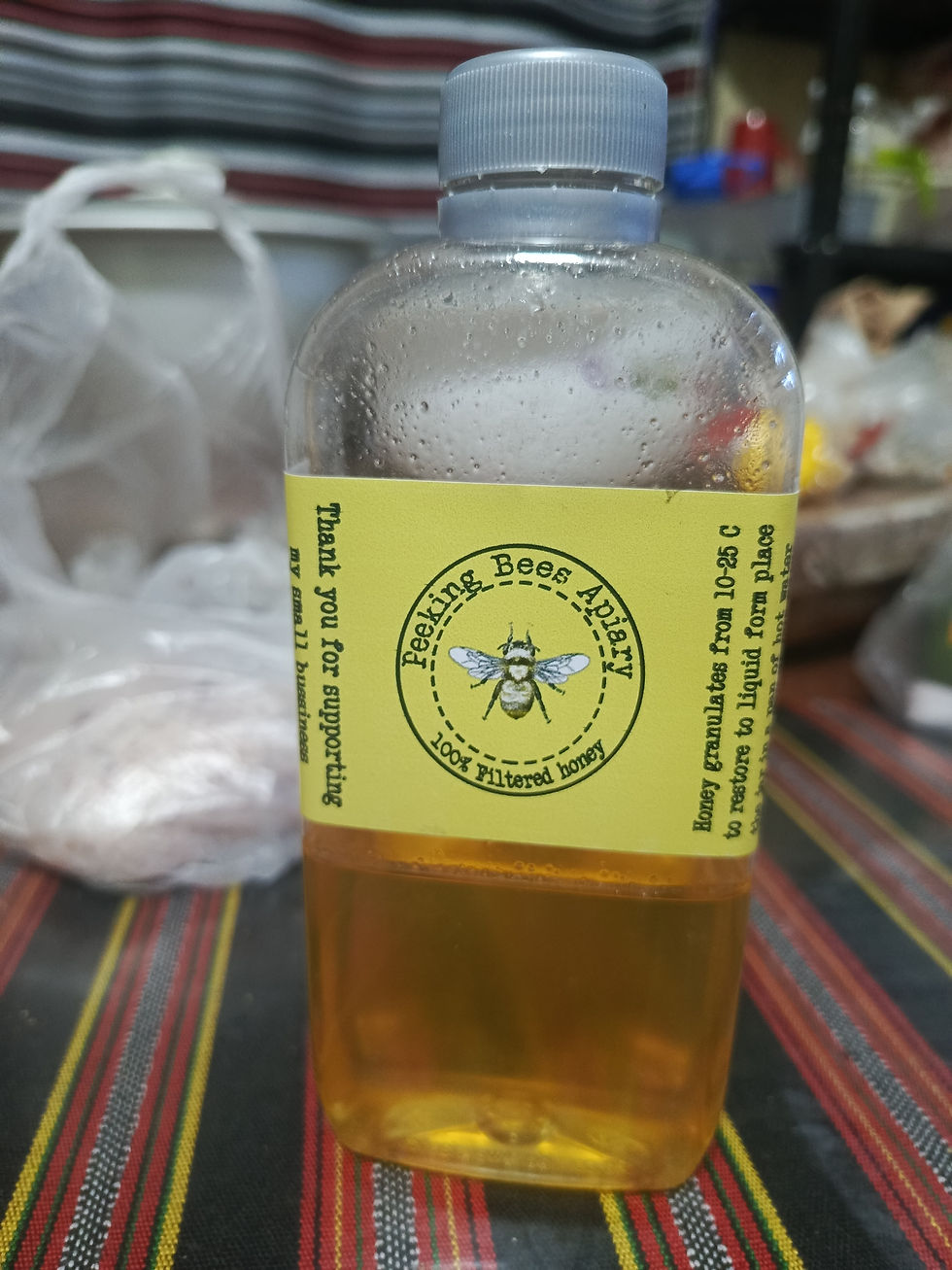
×Peeking Bees Apiary× It's a locally sourced honey from an urban beekeeping farm located in Santa Rosa, Laguna.
Do I love it? Yes. It's one of those rare things that are hard to find today. With all the overly processed foods today by huge corporations and supermarkets, their products stands out. I've ordered 3 bottles now and there will be more in the future.
get yours here

source from owner
According to the owner, the name comes from the bees’ calm demeanor. Instead of reacting aggressively when the hive is opened, they remain completely peaceful, curiously peeking out as seen in the photo above.
Speaking with the apiary’s owner, her passion for the craft was immediately clear as she explained the delicate balance of tropical beekeeping. She noted that while bees remain active year-round thanks to a continuous cycle of seasonal blooms, the rainy season presents a major challenge. Many bees are highly selective foragers, relying heavily on specific plants. When heavy rains stifle these flowers, food becomes scarce, the colony weakens, and the queen slows her egg production. During typhoon season, the colony's survival rests entirely on the beekeeper’s intervention. Ultimately, she emphasized that conserving our natural forests and flora isn't just about saving the bees, it’s about safeguarding an entire ecosystem of local pollinators.
When it comes to the honey-making process, the owner explains that it is a beautifully collaborative effort. Foraging bees collect nectar from flowers, storing it in specialized honey stomachs before flying back to the hive. Once there, they pass the nectar to house bees, who work together to dehydrate the liquid. By vigorously fanning their wings over the honeycomb, the bees reduce the nectar's moisture content from a watery 80% down to a thick, shelf-stable 20%, officially transforming it into honey.

And I was also curious by how changing seasons might influence the final product, I asked the owner how the weather affects the honey's color and flavor profile. She used my own recent orders as a perfect example, pointing out that my latest bottle was strikingly dark, while the previous one had been much lighter. This shift, she explained, is entirely due to the changing floral sources available to the bees throughout the year. Furthermore, the intense summer heat naturally concentrates the nectar before the bees even harvest it, making summer honey noticeably thicker, stickier, and sweeter than batches produced in cooler months.

source from owner
Here's a pic of bees working on the pollen they collected from a mango tree.
How long does it take to make honey?
The owner notes that a thriving hive can fill an entire honey frame in just one to two weeks. Of course, that impressive speed requires nature to cooperate and bad weather or a lack of flowering plants can easily stall the bees' progress.

When it comes to packaging, maintaining strict hygiene standards and proper storage is important. The owner also took the opportunity to debunk a popular myth that many believe, that honey never spoils. While it is true that honey's naturally low moisture content prevents bacteria growth, the Philippines' intense tropical humidity changes the rules. Because honey is hygroscopic, meaning it absorbs water from the air, high humidity can inadvertently raise its moisture levels causing the honey to ferment and go bad if it isn't sealed perfectly and stored in a cool, dry place.

Heat is a double-edged sword when it comes to honey. While excessive warmth degrades the raw honey’s delicate enzymes and health benefits, commercial brands intentionally pasteurize (heat) their products to kill off wild yeasts and artificially extend shelf life. This contrast explains a common consumer mystery: why do some honey bottles unexpectedly crack or burst?
Unlike commercial varieties, raw honey retains its natural yeast and moisture. When exposed to tropical heat, these active ingredients trigger a mild fermentation process, building up gas inside the container. When you combine that internal pressure with the constant movement of a bumpy delivery truck, the trapped gases expand rapidly, occasionally causing the bottles to fracture or pop open during transit.

The presence of natural yeasts and trace bacteria also explains a strict dietary rule: infants should never eat honey. The owner noted that unlike adults, babies have not yet developed the gut protection needed to safely process these natural elements, putting them at risk and so To ensure her customers are fully educated on this health precaution, she proactively includes safety warning labels on all her packaging.

The looming El Niño season brings a host of environmental challenges, from extreme weather to pests that induce hive stress. For the owner, beekeeping has radically shifted her relationship with nature. She admits she rarely paid attention to local weather patterns before; now, she is hyper-aware of her environment. Because her bees forage within a five-kilometer radius, she constantly monitors the landscape, tracking which trees are blooming and anticipating seasonal gaps in the local flora. When continuous heavy rains prevent the bees from flying, they rely entirely on the beekeeper for supplementary feeding to survive. She likens this to human behavior during a typhoon: just as we rely on limited stockpiles of canned goods during a storm but crave fresh food once it passes, bees will tolerate sugar supplements when necessary, but will eagerly abandon them the moment they can forage for natural nectar again.

Timing is everything in the apiary. According to the owner, proper hive management means getting the colony into prime condition long before the "honey flow" arrives. Once this peak blooming season begins, a healthy colony can dedicate all its energy to its main goal and that is collecting as much nectar as possible.
Looking Ahead: Upcoming Projects and Products
The owner hopes to roll out more workshops soon, drawing on the wealth of knowledge she gathered last year while traveling to meet farmers and study different bee species. Readers should definitely keep an eye out for exciting new releases. In the meantime, Peeking Bees has already expanded its lineup with a natural wellness collection. Their current highlights feature propolis-based products, including a soothing ointment and a natural throat spray (pictured below) designed to ease everyday ailments.
As our conversation came to a close, the owner shared a piece of practical advice for anyone wanting to support the local bee community. Her biggest request? Plant more flowers and vegetables. While her specific apiary's bees might not forage in your exact neighborhood, other vital wild pollinators certainly will. She also urged the public not to panic or resort to extermination if they encounter a bee swarm. Instead, simply call a local beekeeper to safely relocate the colony.

Ultimately, her message is a simple but powerful call to action, it's to plant gardens, protect our native trees, and remain mindful of the ecosystem. Safeguarding nature now is the best way to ensure these incredible pollinators thrive for generations to come.
Comments